Build
Plant thirst monitor
With the same board, monitor up to 12 plants.
These parts on their own: $110.
- 10-Port Motherboard×1
- USB-C×1
- Soil Sensor×2
- Screen×1
- Light Grid×1
Smart Home · Wi-Fi · Bluetooth
What it does
- 1A sensor in each pot. The screen shows how wet the soil is.
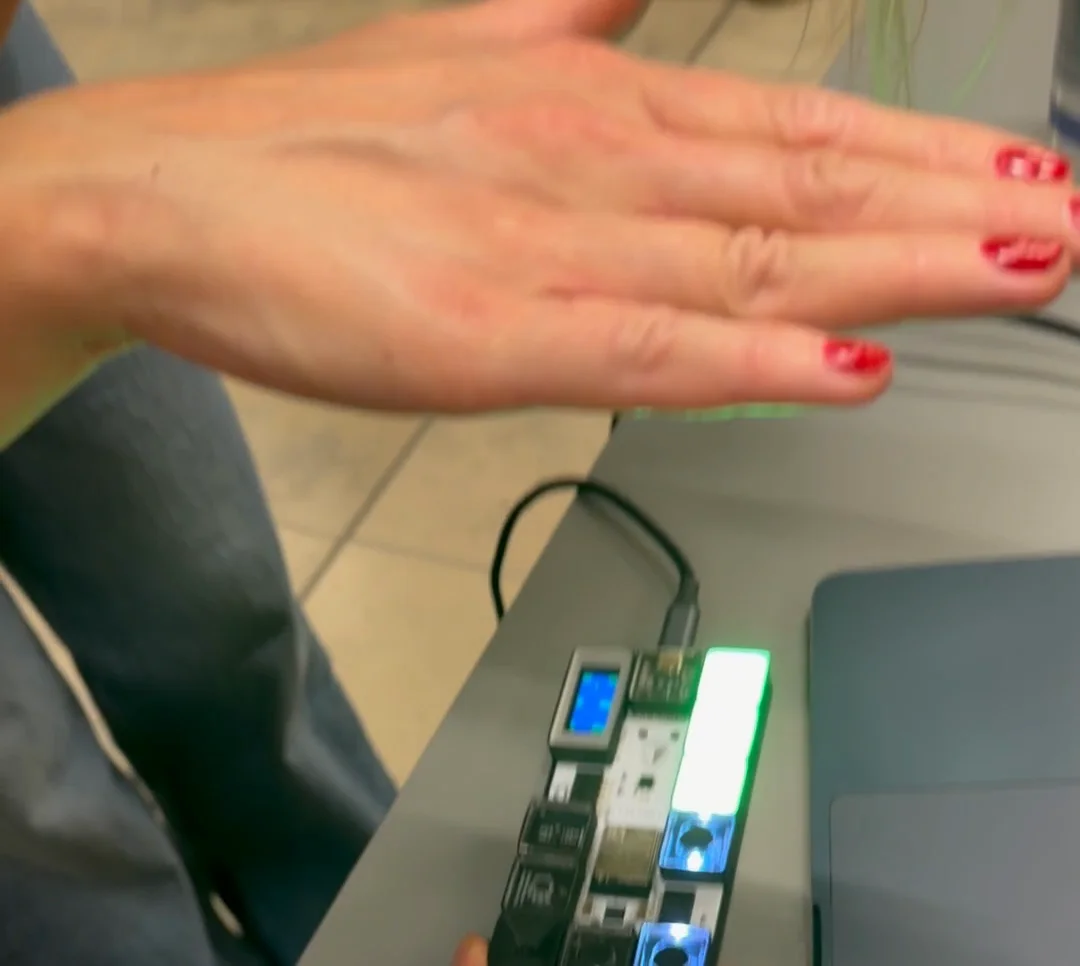
- 2The light grid is green while the plant is fine and turns red when it is thirsty.
How to build it
- 1Slide the screen into ports 7 and 8.
- 2Slide the soil sensor into port 6.
- 3Slide the soil sensor into port 3.
- 4Slide the light grid into port 4.
- 5Slide the USB-C into port 10 and plug the cable into your computer.
- 6Plug it in and press Upload to board.
Uploading works from Chrome or Edge on a computer. Open this page there with the board plugged in.
On the board
- 7+8ScreenSoil moisture as a number and a bar
- 6Soil SensorInto the first pot
- 3Soil SensorInto the second pot
- 4Light GridRed thirsty, amber, green fine
- 10USB-CPower and programming
The code
soil.cpp · 158 linesDownload
// Plant monitor: small (10-port) board, TWO Soil modules, Screen, Button.
// Two faces side by side, one per plant: happy, thirsty (tongue out) or soaked. Bar under each = moisture.
// Button: tap = big view of plant A / plant B / both · hold 1 s = store "dry" (probes in air) · double tap = store "wet" (probes in water).
// The board's 14 onboard lights follow the thirstier plant: green ok, orange dry, blue soaked.
// Optional Light Grid on port 4: the same as a traffic light, red (thirsty) / amber (getting dry) / green (fine), blue when soaked.
#include <Arduino.h>
#include <Adafruit_NeoPixel.h>
#include "drivers/i2c_software.h"
#include <Preferences.h>
#include "modules/display/st7735_tft.h"
#include "modules/input/button.h"
#ifdef GRID_A
#include "modules/led/neopixel.h"
NeoPixelGrid grid(GRID_A, GRID_B);
#endif

ST7735_TFT   screen(SCR_SCLK, SCR_CS, SCR_MOSI, SCR_DC);
SoftwareI2C  busA(SOILA_SDA, SOILA_SCL), busB(SOILB_SDA, SOILB_SCL);
// The soil modules answer at 0x42 and ignore the register address: every read returns
// [raw lo, raw hi, status, 01, 01]. raw is ~0xFF00 with the prongs in air (open) and drops as the soil gets wetter
// (wet fingers: 0x6300 -> 0x3800). status 0x03 = prongs open, 0x02 = conducting. Read directly, no library.
struct RawSoil {
    SoftwareI2C* bus; uint16_t raw = 0xFF00; uint8_t status = 0; bool present = false;
    explicit RawSoil(SoftwareI2C* b) : bus(b) {}
…